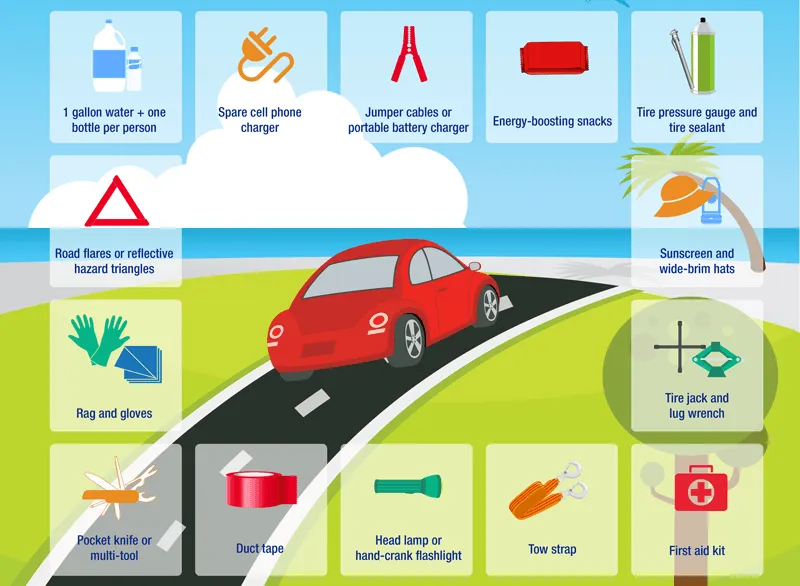
Being prepared for roadside emergencies is crucial for every driver in Ireland. Our unpredictable weather and varying road conditions mean that having a well-stocked emergency kit in your vehicle isn't just convenient – it's essential. Here's our comprehensive guide to building the perfect car emergency kit.
Basic Safety Equipment
1. High-Visibility Gear
- High-visibility vest (EN ISO 20471 certified)
- Warning triangle
- LED warning lights or flares
Pro Tip: Keep your hi-vis vest easily accessible – ideally not in the boot where it might be difficult to reach in an emergency.
2. First Aid Supplies
- Comprehensive first aid kit including:
- Assorted plasters and bandages
- Antiseptic wipes
- Scissors and tweezers
- Pain relief medication
- Burn gel
- Emergency foil blanket
Vehicle Recovery Equipment
3. Essential Tools
- Jump leads/portable jump starter
- Basic tool kit (screwdrivers, adjustable spanner, pliers)
- Tyre pressure gauge
- Tyre inflator/compressor
- WD-40 or similar lubricant
Pro Tip: Modern portable jump starters often include USB ports for charging phones – a valuable dual-purpose item.
4. Tyre-Related Items
- Spare tyre (check pressure regularly)
- Jack and wheel brace
- Tyre repair kit/foam
- Wheel chocks
Weather-Specific Items
Irish Weather Consideration: Our climate can be unpredictable, with conditions changing rapidly. It's important to be prepared for all weather scenarios, even during summer months.
5. Winter Essentials
- Ice scraper and de-icer
- Snow shovel (foldable)
- Traction mats or cat litter for grip
- Warm blankets
- Extra screen wash (winter formula)
- Hand warmers
6. Wet Weather Items
- Waterproof jacket
- Umbrella
- Wellington boots
- Microfibre cloth (for windscreen demisting)
Personal Comfort and Communication
7. Essential Supplies
- Bottled water and non-perishable snacks
- Phone charger and portable power bank
- Small amount of cash
- Notebook and pen (for insurance details)
- Basic toiletries
8. Important Documents
- Vehicle manual
- Insurance documents
- Emergency contact numbers
- Basic first aid manual
- Membership details for breakdown services
Maintenance and Regular Checks
Having an emergency kit is only effective if it's properly maintained. Here's how to keep your kit ready for use:
- Check expiry dates on first aid items and replace as needed
- Test electronic devices regularly
- Replace batteries in torches and warning lights
- Inspect tools for rust or damage
- Update emergency contact numbers
- Check tyre inflator and jump leads are working
Storage Tips
Store your emergency kit in a waterproof container or bag, clearly labeled and easily accessible. Consider splitting the kit into categories (tools, first aid, weather gear) for better organization.
Additional Considerations for Different Vehicles
Electric Vehicles
- Charging cables for different points
- Extension cord
- Adapter for different charging networks
- List of charging points along regular routes
Diesel Vehicles
- Diesel antigel additive (winter)
- Fuel filter wrench
- Fuel can (properly labeled)
While having an emergency kit is essential, professional help is still one call away. Contact Emergency Towing & Recovery 24/7 at (087) 185 8558 for immediate assistance across Dublin city and suburbs.
Seasonal Kit Updates
Remember to review and update your emergency kit as seasons change. What you need in winter differs significantly from summer requirements. Mark your calendar for seasonal checks in March (Spring), June (Summer), September (Autumn), and December (Winter).